
Optical Penetrating Keratoplasty: Procedure, Benefits, Risks & Recovery
Clear vision depends greatly on the health and transparency of the cornea. When the cornea becomes severely scarred, cloudy, damaged, or diseased, it can interfere with the normal passage of light into the eye and cause significant vision problems.
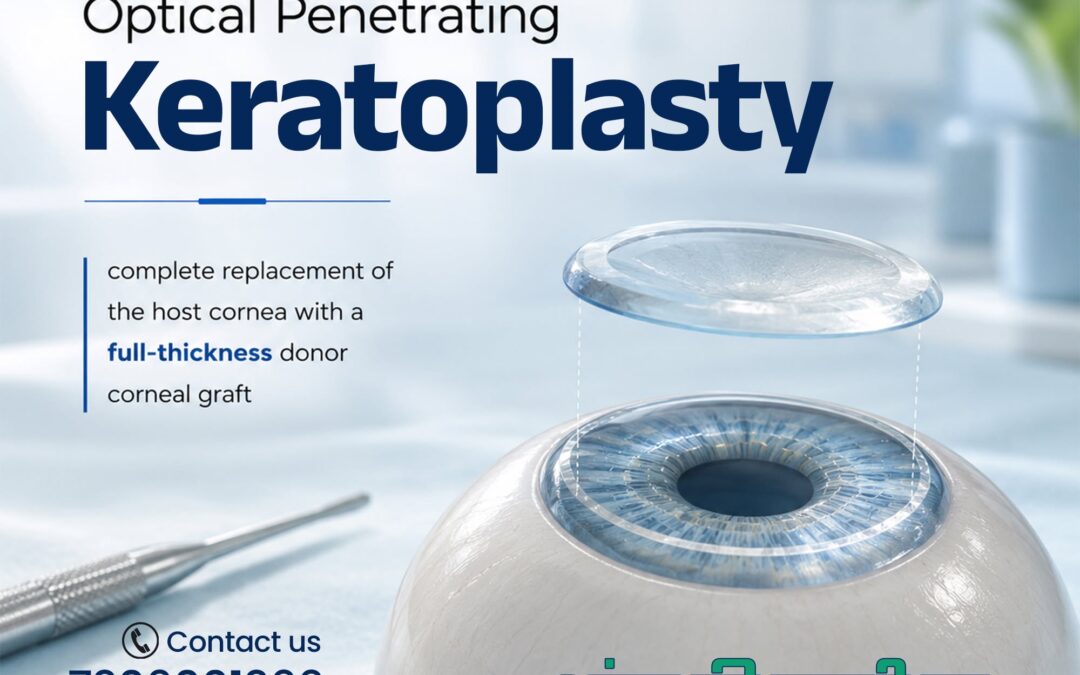
Optical Penetrating Keratoplasty (PKP) is a full-thickness corneal transplant procedure that may be recommended when the damaged cornea needs to be replaced with healthy donor corneal tissue. The primary objective of optical penetrating keratoplasty is to improve the optical clarity of the cornea and help restore useful vision.
For patients looking for advanced corneal treatment, LJ Eye Institute provides specialised cornea care, including corneal transplantation and Optical Penetrating Keratoplasty. The institute has dedicated cornea services and offers advanced corneal transplantation techniques.
Visit the official website: https://ljeyeinstitute.org/
What Is Optical Penetrating Keratoplasty?
Optical Penetrating Keratoplasty is a type of corneal transplant surgery in which the diseased or opaque full-thickness portion of the cornea is surgically removed and replaced with healthy donor corneal tissue.
The cornea is the transparent front surface of the eye. It helps focus incoming light and plays a major role in clear vision. If the cornea becomes cloudy or irregular because of disease, injury, infection, or scarring, vision may become blurred or distorted.
Unlike partial-thickness corneal transplantation procedures, penetrating keratoplasty involves replacing the full thickness of the affected corneal tissue.
Why Is Optical Penetrating Keratoplasty Needed?
A corneal transplant may be considered when significant corneal damage cannot be adequately managed with other treatment options.
Possible conditions that may require corneal transplantation include:
- Severe corneal scarring
- Advanced keratoconus
- Corneal dystrophies
- Severe corneal infections
- Corneal opacity
- Serious eye injuries or trauma
- End-stage corneal disease
- Certain cases of corneal degeneration
- A previously failed corneal transplant
The decision for surgery depends on the individual patient’s corneal condition, visual needs, overall eye health, and the expected benefits of transplantation.
How Is Optical Penetrating Keratoplasty Performed?
Before surgery, a detailed examination of the eye and cornea is performed. The cornea specialist evaluates the extent of disease and determines whether a full-thickness transplant is appropriate.
During Optical Penetrating Keratoplasty:
1. Anaesthesia: Appropriate anaesthesia is given to make the procedure comfortable and prevent pain during surgery.
2. Removal of Diseased Cornea: The surgeon carefully removes the damaged central portion of the cornea.
3. Donor Corneal Tissue: A healthy donor corneal graft obtained through an appropriate eye-bank system is prepared for transplantation.
4. Placement of the Graft: The donor corneal tissue is carefully positioned in the patient’s eye.
5. Securing the Transplant: Very fine surgical sutures are used to secure the donor cornea in place.
The eye is then monitored closely during the postoperative period.
How Is Optical Penetrating Keratoplasty Performed?
Before surgery, a detailed examination of the eye and cornea is performed. The cornea specialist evaluates the extent of disease and determines whether a full-thickness transplant is appropriate.
During Optical Penetrating Keratoplasty:
1. Anaesthesia: Appropriate anaesthesia is given to make the procedure comfortable and prevent pain during surgery.
2. Removal of Diseased Cornea: The surgeon carefully removes the damaged central portion of the cornea.
3. Donor Corneal Tissue: A healthy donor corneal graft obtained through an appropriate eye-bank system is prepared for transplantation.
4. Placement of the Graft: The donor corneal tissue is carefully positioned in the patient’s eye.
5. Securing the Transplant: Very fine surgical sutures are used to secure the donor cornea in place.
The eye is then monitored closely during the postoperative period.
Benefits of Optical Penetrating Keratoplasty
The major goal of Optical Penetrating Keratoplasty is to improve vision when corneal disease is the major cause of visual impairment.
Potential benefits include:
- Improved corneal transparency
- Better visual quality
- Reduction in vision problems caused by corneal scarring or opacity
- Restoration of a clearer optical pathway
- Improved ability to perform everyday visual activities
The final visual result varies between patients. Factors such as the original corneal disease, condition of the retina and optic nerve, postoperative astigmatism, and healing response can influence the outcome.
Optical Penetrating Keratoplasty vs Other Corneal Transplants
Not every patient with corneal disease requires a full-thickness transplant.
Modern corneal surgery includes different techniques depending on which layer of the cornea is affected. These can include:
- DALK – Deep Anterior Lamellar Keratoplasty
- DMEK – Descemet Membrane Endothelial Keratoplasty
- DSEK – Descemet Stripping Endothelial Keratoplasty
- Penetrating Keratoplasty (PKP)
The appropriate procedure is selected after a detailed examination by a cornea specialist.
LJ Eye Institute provides advanced corneal transplantation services, including DALK, DMEK, DSEK and penetrating keratoplasty procedures.
Optical Penetrating Keratoplasty vs Other Corneal Transplants
Not every patient with corneal disease requires a full-thickness transplant.
Modern corneal surgery includes different techniques depending on which layer of the cornea is affected. These can include:
- DALK – Deep Anterior Lamellar Keratoplasty
- DMEK – Descemet Membrane Endothelial Keratoplasty
- DSEK – Descemet Stripping Endothelial Keratoplasty
- Penetrating Keratoplasty (PKP)
The appropriate procedure is selected after a detailed examination by a cornea specialist.
LJ Eye Institute provides advanced corneal transplantation services, including DALK, DMEK, DSEK and penetrating keratoplasty procedures.
Risks and Possible Complications
Although corneal transplantation can provide significant visual benefits, it is a major eye surgery and has potential risks.
Possible complications may include:
- Graft rejection
- Graft failure
- Infection
- Increased eye pressure
- Astigmatism
- Delayed healing
- Corneal inflammation
- Suture-related problems
- Changes or fluctuations in vision
One of the important complications following corneal transplantation is graft rejection.
Patients should contact their eye specialist promptly if they develop sudden reduction in vision, increasing redness, eye pain, unusual sensitivity to light, or other significant changes after surgery.
Recovery After Optical Penetrating Keratoplasty
Recovery from penetrating keratoplasty is gradual. Vision may initially remain blurred and can improve progressively as the transplanted cornea heals.
The sutures may remain in place for an extended period and may be adjusted or removed by the surgeon at appropriate stages of healing.
During recovery, patients should:
- Use prescribed eye drops regularly
- Attend scheduled follow-up examinations
- Avoid rubbing or pressing the operated eye
- Protect the eye from accidental injury
- Follow the surgeon’s instructions regarding physical activity
- Report sudden changes in vision or other concerning symptoms
Visual recovery can take several months and sometimes longer. Regular follow-up with the cornea specialist is essential.
Why Choose LJ Eye Institute for Corneal Treatment?
LJ Eye Institute Ambala is a super-speciality eye care institute with a strong focus on advanced ophthalmology, corneal care, eye surgery, education, and research.
The institute states that it has been providing specialised eye care since 2017 and offers advanced treatment across multiple ophthalmic specialities. Its services include cornea transplantation, retina care, cataract surgery, glaucoma treatment, refractive surgery, pediatric ophthalmology and other specialised eye-care services.
LJ Eye Institute has a dedicated Cornea Clinic, where treatments listed include:
- Cornea Transplant
- DMEK
- DSEK
- DALK
- K-Pro / Artificial Cornea
- Corneal Collagen Cross-Linking
- Corneal infection and ulcer management
- Pterygium surgery
- Therapeutic Penetrating Keratoplasty
- Optical Penetrating Keratoplasty
The institute also highlights advanced corneal transplantation procedures, including femtosecond laser-assisted DALK or PKP and endothelial keratoplasty procedures such as DSAEK and DMEK.
LJ Eye Institute Ambala
For patients in Ambala and nearby areas of Punjab, LJ Eye Institute has a dedicated Ambala branch.
LJ Eye Institute – Ambala Branch
Address: 35, Near Amar Hospital, Bank Colony, Ambala, Punjab 147001
The Ambala branch provides access to LJ Eye Institute’s ophthalmic services, making specialised eye-care consultation more accessible to patients in the region. The official website lists the Ambala branch as open Monday to Saturday, 9:00 AM to 6:00 PM.
Patients experiencing severe corneal opacity, corneal scarring, keratoconus, reduced vision due to corneal disease, or other serious corneal problems can consult an ophthalmologist or cornea specialist for a detailed evaluation.